.png)
Cross-border delivery is where many UAE e-commerce brands hit a ceiling. Demand is there, ads are converting, orders start coming in — then logistics quietly becomes the constraint. For many brands, choosing the right cross border delivery service is critical to overcoming these challenges, as it ensures customs clearance, international returns, on-time delivery, and a seamless digital customer experience.
Scaling internationally isn’t about offering shipping to more countries. It’s about being deliberate: choosing the right lanes, the right transport models, and delivery promises you can actually keep — and understanding your cross border shipping options to manage international logistics efficiently — then backing all of that with partners who execute consistently.
This playbook focuses on the decisions that matter early, before growth gets expensive. For first-time brands or individuals considering international expansion, taking a strategic approach to cross-border delivery is essential for long-term success.
Map the main lanes and respect local expectations
Every cross-border lane behaves differently. Customer patience, service expectations, and sensitivity to delays change by market.
Core GCC lanes
UAE → KSA
This is the highest-volume lane and usually the toughest. Customers expect speed, accurate tracking, and dependable cash-on-delivery. Small delays quickly translate into complaints or refusals.
UAE → Kuwait / Qatar
Lower volume, but expectations are still high. Customers care less about same-day speed and more about predictability and clear communication.
UAE → Bahrain / Oman
Shorter distances don't remove complexity. Customs efficiency and weekend cut-offs still affect delivery performance more than many brands expect.
International expansion lanes
UAE → UK / EU
Speed matters, but clarity matters more. Customers expect proper tracking, defined delivery windows, and no surprises around duties and VAT.
Mapping lanes properly lets you tailor delivery promises and carrier choices instead of forcing one shipping model across every market.
Choose the shipping model, not just the carrier
One of the biggest cross-border mistakes is focusing on couriers before deciding how parcels should move. Air is a crucial transportation mode for cross border delivery, especially for urgent or premium shipments, offering speed advantages and airline space guarantees.
Direct injection
Parcels are line-hauled into the destination country and injected straight into a local courier network.
- Scales well at volume
- Better cost control and service consistency
- Requires tight coordination between line-haul and last mile
Consolidation
Orders move in bulk, are temporarily stored for consolidation, clear customs together, then get distributed locally. Storage is an integral part of this process, ensuring shipments are efficiently managed before customs clearance and local distribution.
- Strong for customs efficiency
- Lower per-unit cost at scale
- Slightly slower, but often more predictable
Line-haul vs postal vs express
- Line-haul + local courier: Usually the best balance for GCC and high-volume lanes, and well-suited for international shipments that require cost-effective delivery across borders with reliable transit times.
- Postal networks: Cheap, but slow and limited on visibility, making them suitable for low-cost international shipments where speed is less critical.
- Express couriers: Fast and premium, but expensive and hard to scale without margin pressure; ideal for urgent international shipments that demand quick delivery and end-to-end tracking.
There’s no universal “best” option. The right setup depends on lane, volume, the experience you’re promising customers, and the specific requirements of your international shipments.
Design the delivery promise instead of guessing it
Delivery promises shouldn't be optimistic estimates. They should be engineered.
Key variables to lock down:
- Transit time: D+2 vs D+5 affects costs, carrier choice, and customer expectations
- Warehouse cut-off times: Later cut-offs in Dubai can unlock faster cross-border departures
- Weekend impact: GCC weekends differ, and international lanes add another layer of complexity
- Exception handling: Clear rules for customs delays, address issues, and missed attempts
A promise you hit consistently will outperform an aggressive one you miss half the time.
Understanding customs clearance for cross-border e-commerce
Customs clearance is a critical step in cross border delivery that affects delivery time, shipping rates, and customer satisfaction. It ensures shipments comply with destination country regulations through proper documentation, payment of duties and taxes, and inspection of goods. Accurate commercial invoices, packaging, and compliance with local rules help avoid delays and extra fees.
For UAE e-commerce businesses shipping internationally, partnering with logistics providers who offer expertise and support in customs clearance can streamline the process. Using digital tools for documentation and tracking improves transparency and peace of mind, ensuring shipments cross international borders securely and arrive on time.
Efficient customs clearance is key to seamless shipping and excellent service in cross border logistics. By focusing on compliance, leveraging technology, and working with experienced teams, companies can reduce costs, avoid delays, and deliver a great experience to customers worldwide.
Duty and VAT handling directly affects conversion
Duty and VAT decisions don’t just sit in ops — they show up in your checkout funnel. Export requirements and procedures, such as customs declarations and documentation, directly influence how duties and VAT are calculated and handled.
DDU (Delivered Duty Unpaid)
- Lower price at checkout
- Customer pays on delivery
- Higher refusal and return rates
- Common cause of failed deliveries
DDP (Delivered Duty Paid)
- Duties and VAT calculated upfront
- Fewer surprises for customers
- Smoother last-mile execution
- Higher conversion, especially for UK and EU
In many markets, clarity beats speed. Customers are more forgiving of a slower delivery than an unexpected payment at the door.
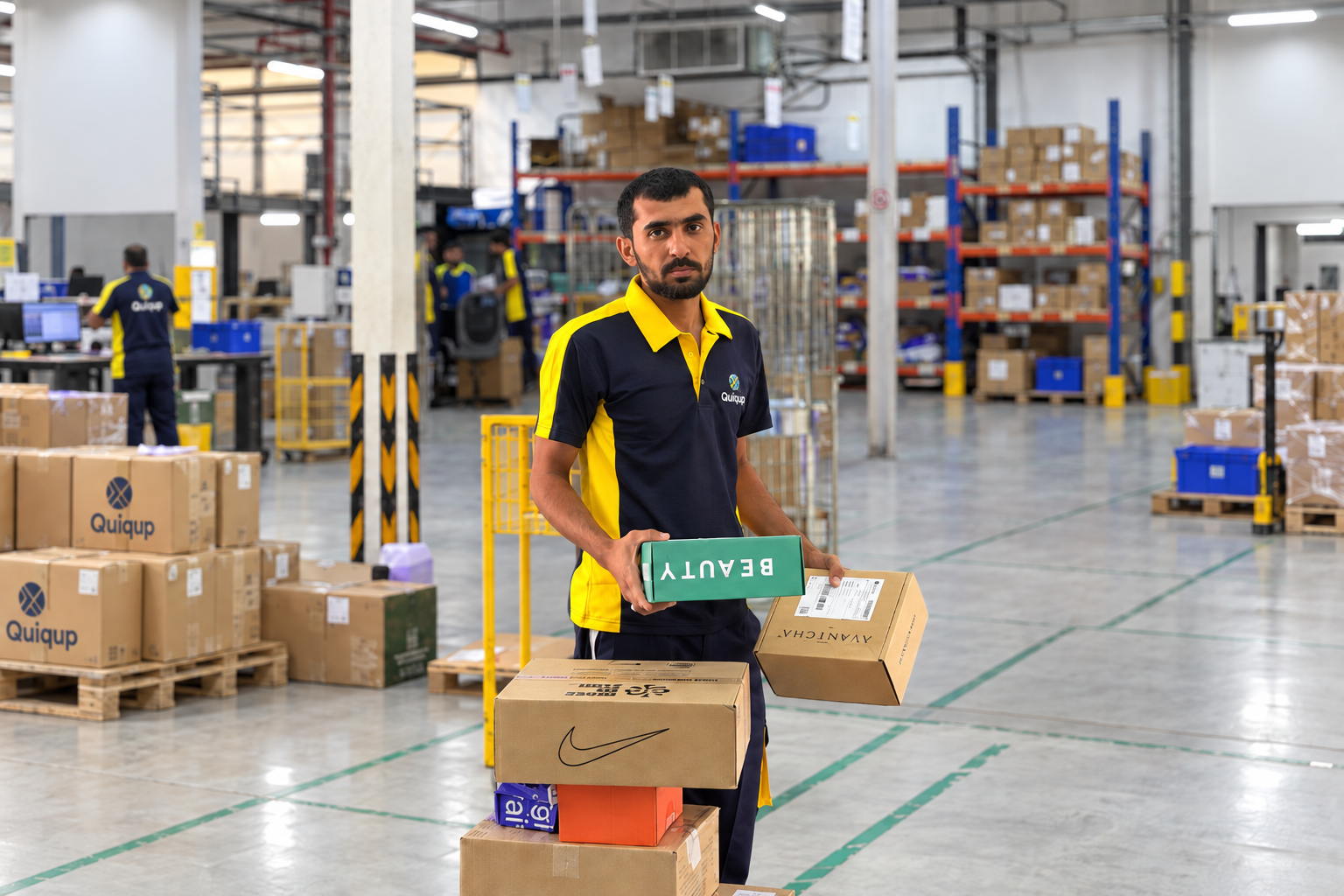
Where a partner like Quiqup fits in the stack
Cross-border delivery is rarely handled by a single provider. It’s a layered setup.
A partner like Quiqup typically operates across:
- UAE warehouse pickup
- Line-haul coordination
- Integration with vetted local last-mile partners
- End-to-end operational visibility
- Assistance with preparation and management of required documents for customs clearance and compliance
- Enabling sellers to collaborate and share logistics resources or storage space to reduce costs and increase efficiency
This kind of hybrid approach avoids the rigidity of all-express models while keeping control over service quality. You can move fast where it matters, save costs where possible, and still deliver a consistent brand experience.
Final thoughts
Cross-border growth isn't about shipping further. It's about shipping with intent.
Brands that scale well map their lanes early, pick transport models lane by lane, set delivery promises they can stand behind, and handle duties transparently. The ones that don't usually pay for it later — in margins, churn, or reputation.
Good logistics isn't flashy. It's deliberate, measurable, and built to keep working as volume grows.







.png)