.png)
Choosing between Quiqup and Jeebly usually means you’re deciding how far your e-commerce operations need to scale — not just how fast parcels move.
Both companies operate in the UAE and support e-commerce deliveries. But they are built for different stages of growth and different levels of operational complexity. Brands that struggle after choosing one often don’t fail on delivery itself — they fail on fulfilment coordination, cut-offs, and growing pains.
This comparison looks at Quiqup vs Jeebly from an e-commerce perspective: delivery speed, fulfilment scope, tech integration, COD handling, and where each partner fits best.
Quiqup and Jeebly Serve Different E-Commerce Stages
At a high level, the difference is about depth vs simplicity.
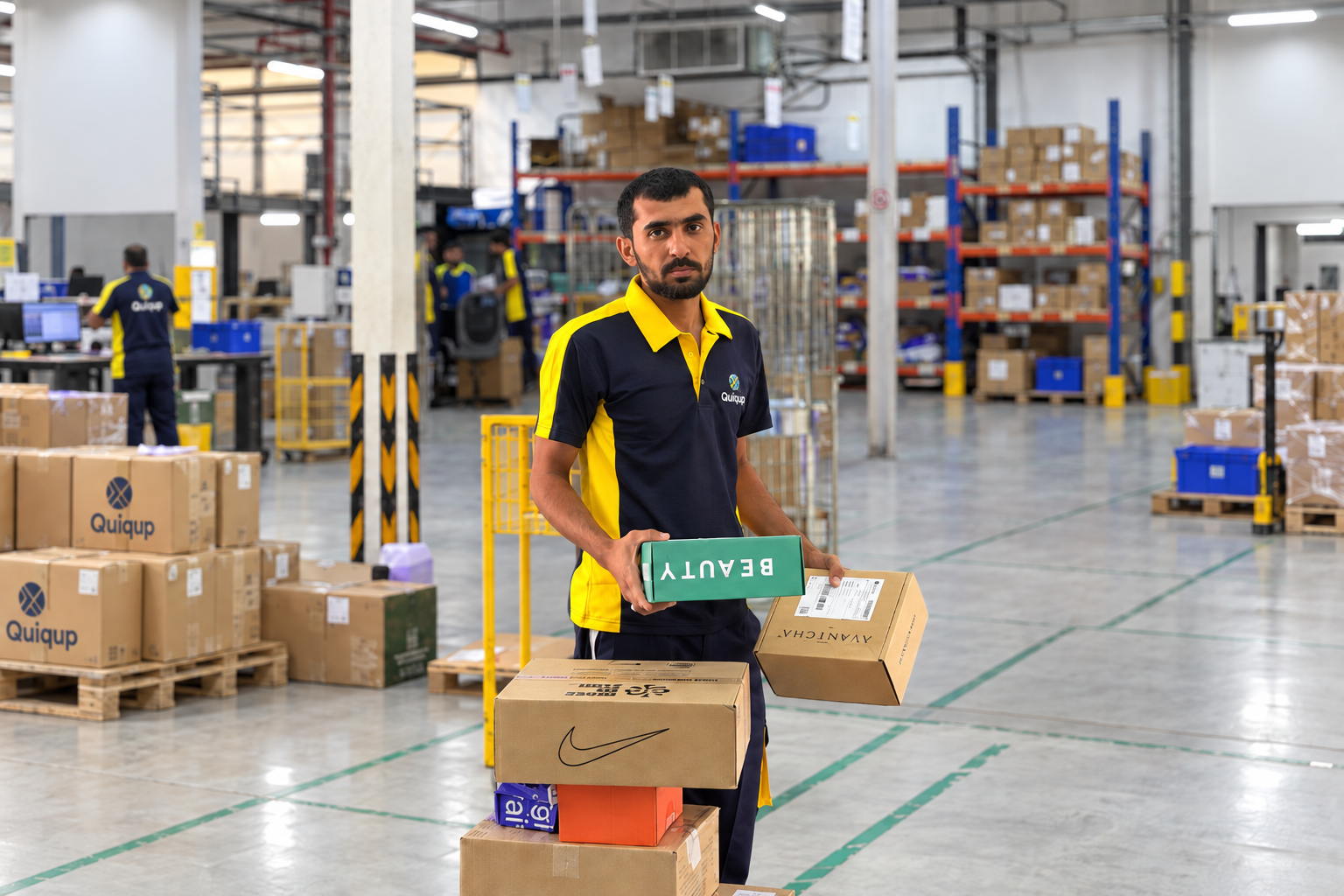
Quiqup is designed around integrated e-commerce fulfilment and delivery, supporting brands that need warehousing, pick & pack, returns, and last-mile delivery to operate as one system.
Jeebly is primarily a delivery-focused logistics provider, often chosen by small to mid-sized businesses looking for straightforward courier services with optional fulfilment support.
Both can serve e-commerce — but at very different levels of operational intensity.
Delivery Speed and Cut-Off Discipline
Quiqup: Speed Designed With Fulfilment in Mind
Quiqup supports same-day and next-day delivery in the UAE, with cut-offs designed around warehouse dispatch and courier handover.
This model works best when:
- delivery speed affects conversion
- orders arrive throughout the day
- missed cut-offs lead to cancellations or refunds
Because fulfilment and delivery are coordinated, cut-offs are enforced systematically rather than manually.
Jeebly: Reliable Delivery With Simpler Workflows
Jeebly focuses on reliable domestic delivery, including next-day and scheduled options, and is often used by businesses that don’t require tight same-day cut-offs.
This fits when:
- delivery speed is important but not a core differentiator
- volumes are moderate and predictable
- fulfilment complexity is low
Jeebly’s strength is simplicity rather than aggressive time optimisation.
Fulfilment and Warehousing Capabilities
Quiqup Fulfilment
Quiqup offers full e-commerce fulfilment in the UAE, including:
- inventory storage
- pick and pack
- dispatch aligned to delivery SLAs
- returns processing back into stock
This setup is built for:
- daily order velocity
- COD-heavy flows
- brands scaling beyond manual operations
Fulfilment is a core part of the service, not an add-on.
Jeebly Fulfilment Support
Jeebly offers fulfilment and storage services, typically aimed at:
- smaller SKU catalogues
- simpler pick-and-pack needs
- businesses early in their e-commerce journey
This works well for brands that want a basic fulfilment layer without heavy process design or integration.
Tech Stack and Integrations
Quiqup
Quiqup integrates with common e-commerce platforms such as Shopify and WooCommerce, focusing on:
- automated order syncing
- real-time fulfilment and delivery status
- reduced manual handling
This suits teams that want fulfilment and delivery tightly connected to their store and OMS.
Jeebly
Jeebly provides tools and integrations to support order creation, tracking, and COD management.
These setups:
- are generally lighter-weight
- work well for straightforward delivery flows
- may require more manual steps as volume grows
This is often acceptable for smaller operations.
COD, Returns, and Customer Experience
Quiqup
Quiqup is designed for COD-heavy UAE e-commerce, with:
- structured doorstep payment handling
- fast reattempts
- integrated returns back to the fulfilment centre
This reduces refusal rates and shortens cash cycles as volume scales.
Jeebly
Jeebly supports COD and returns primarily at the courier level.
This is sufficient for:
- low to moderate volumes
- simpler return expectations
As return volumes increase, additional coordination may be required on the merchant side.
Pricing and Commercial Structure (High-Level)
Comparing prices directly often hides the real difference.
- Quiqup’s model reflects integrated fulfilment, delivery speed, and operational depth.
- Jeebly’s model reflects straightforward delivery and accessible pricing for smaller businesses.
The trade-off is usually between:
- lower upfront complexity vs long-term scalability
- simplicity vs operational leverage
When Quiqup Is the Better Fit
Quiqup is usually the better choice if:
- you run a growing D2C e-commerce brand
- fulfilment and delivery need to scale together
- same-day or next-day delivery affects conversion
- COD and returns volumes are increasing
- you want fewer operational handovers
When Jeebly Is the Better Fit
Jeebly is often a good fit if:
- you are an early-stage or smaller e-commerce business
- delivery needs are simple and predictable
- fulfilment requirements are minimal
- you value straightforward setup over deep optimisation
Can Brands Start With Jeebly and Move to Quiqup?
Yes — and this is common.
Many UAE brands:
- start with Jeebly for early delivery needs
- move to Quiqup when order volume, SKU count, or speed expectations increase
The key is recognising when simplicity starts turning into a bottleneck.
Final Verdict: Quiqup vs Jeebly
This comparison isn’t about right or wrong.
It’s about stage and structure.
If your business needs simple, reliable delivery, Jeebly might be a practical starting point.
If your business needs integrated fulfilment, fast delivery, and room to scale, Quiqup is usually the better long-term fit.
The biggest risk isn’t choosing the wrong partner — it’s staying with a model that no longer matches how your e-commerce operation actually runs.







.png)