.png)
Cross-border delivery rarely breaks at customs.
It usually breaks earlier — at checkout.
When customers don’t clearly understand the total cost of an international order, they hesitate. Some abandon the cart. Others complete the purchase and refuse the delivery later when extra charges appear. Incoterms, or international commercial terms, are standardized rules created by the International Chamber of Commerce (ICC) to clarify delivery methods, responsibilities, and associated costs in international trade. Incoterms won’t fix every issue, but the choice between DDP and DAP is one of the most direct ways UAE brands can reduce friction and protect conversion.
This article explains the difference in plain terms, shows how it affects customer behaviour, and outlines what tends to work best by lane when shipping from the UAE.
DDP vs DAP, explained simply (B2C context)
DDP — Delivered Duty Paid
You, the seller, assume maximum responsibility for:
- shipping goods and arranging transportation to the buyer's location (final destination)
- handling customs clearance, import customs clearance, and all import procedures and import process in the buyer's country
- paying all customs duties, import taxes, and VAT
- managing the entire import clearance and import clearance process
- delivering goods directly to the customer’s address, ensuring all delivery duty paid (DDP) obligations are met
Under DDP shipping and ddp shipping services, the seller bears all financial responsibility and shipping related expenses until the goods are delivered to the buyer's location, including working with a customs broker if needed. The seller's responsibilities include delivering goods directly to the buyer’s location, ensuring all delivery duty paid requirements are fulfilled.
Customer experience:“I paid once at checkout. The parcel arrived. No extra steps.”
DAP — Delivered At Place
You deliver the parcel to the destination country, but the customer is responsible for:
- paying import duties, import taxes, and VAT at the agreed upon location or delivery location
- covering any customs handling fees and handling customs clearance
- completing all import clearance, import formalities, and import procedures required for the shipment
- sometimes completing payment or documentation before release
Under DAP, risk transfers to the buyer once the goods arrive at the agreed upon location, and the buyer assumes responsibility for all delivery duty and related costs. The buyer handles import clearance and any required documentation or payments to complete the import process.
Customer experience:“I already paid — why am I being asked for more money?”
Note: Many teams still use the term “DDU.” In practice, this usually refers to DAP-style delivery.
Why this choice affects cart abandonment and failed deliveries
The checkout gap
With DAP, the checkout total often looks lower than the actual landed cost. Customers only see the full amount when:
- the courier requests payment, or
- the shipment is held pending customs charges
That gap creates predictable problems:
- cart abandonment due to uncertainty
- refused deliveries when fees appear unexpectedly
- higher return-to-sender rates and support load
With DDP, you can present a landed-cost experience:
- the customer pays once
- customs is handled in the background
- delivery feels predictable
This tends to matter most for first-time cross-border buyers who haven’t built trust with your brand yet.
Lane-by-lane: what typically works from the UAE
UAE → KSA
Saudi Arabia is a high-demand lane, but it’s also one where compliance discipline matters.
Certain categories — including cosmetics, some food and supplements, and other regulated goods — require proper documentation and pre-clearance steps. When these aren’t handled cleanly, DAP shipments are more likely to face delays or refusals.
What usually works:
- Early testing: DAP can work for low-risk products if checkout messaging is clear.
- Scaling KSA: DDP becomes safer as volume grows, reducing refusals, reattempts, and customer service pressure.
For brands running paid acquisition into KSA, unexpected duties are costly — not only in refunds, but in trust.
UAE → EU
European customers are generally less tolerant of unclear totals.
If checkout shows one price and delivery introduces another, confidence drops quickly, especially for first-time purchases.
What usually works:
- Testing demand: DAP is workable if duties and VAT are clearly explained before checkout.
- Scaling EU: DDP or landed-cost models tend to be more stable for conversion, returns handling, and repeat purchases.
UAE → UK
The UK has specific VAT rules for low-value imports. When customers are asked to pay VAT and handling fees at delivery, disputes and refusals are common.
What usually works:
- Small volumes: DAP can be acceptable with explicit communication.
- Consistent UK sales: DDP-style delivery generally reduces friction and failed deliveries.
Cost implications of DDP vs DAP for UAE online stores
When UAE online stores expand into international markets, the choice between Delivered Duty Paid (DDP) and Delivered At Place (DAP) has a direct impact on shipping costs, customs clearance, and overall profitability.
What changes operationally when you choose DDP vs DAP
Choosing DDP means owning more of the process
For the merchant:
- accurate HS codes and product descriptions
- duty and VAT estimation (with buffers for variance)
- clear returns logic to avoid tax complications
- ownership of the customs experience
- managing export clearance as part of the DDP process
For the logistics partner:
- coordinating clearance and brokerage
- settling duties and taxes on your behalf
- stricter data and documentation requirements
- stronger exception handling
DDP improves customer experience by moving complexity behind the scenes — onto your operations and logistics setup.
Choosing DAP keeps launch simpler, but shifts risk
For the merchant:
- stronger checkout disclaimers and post-purchase messaging
- higher risk of refusals and return-to-origin costs
- more “why am I paying extra?” support tickets
For the courier:
- collecting duties and VAT from the customer
- managing customs holds and payment release
- higher doorstep friction and failed attempts
DAP is easier to start with. It’s usually harder to scale cleanly.
Where Quiqup fits in a DDP vs DAP setup
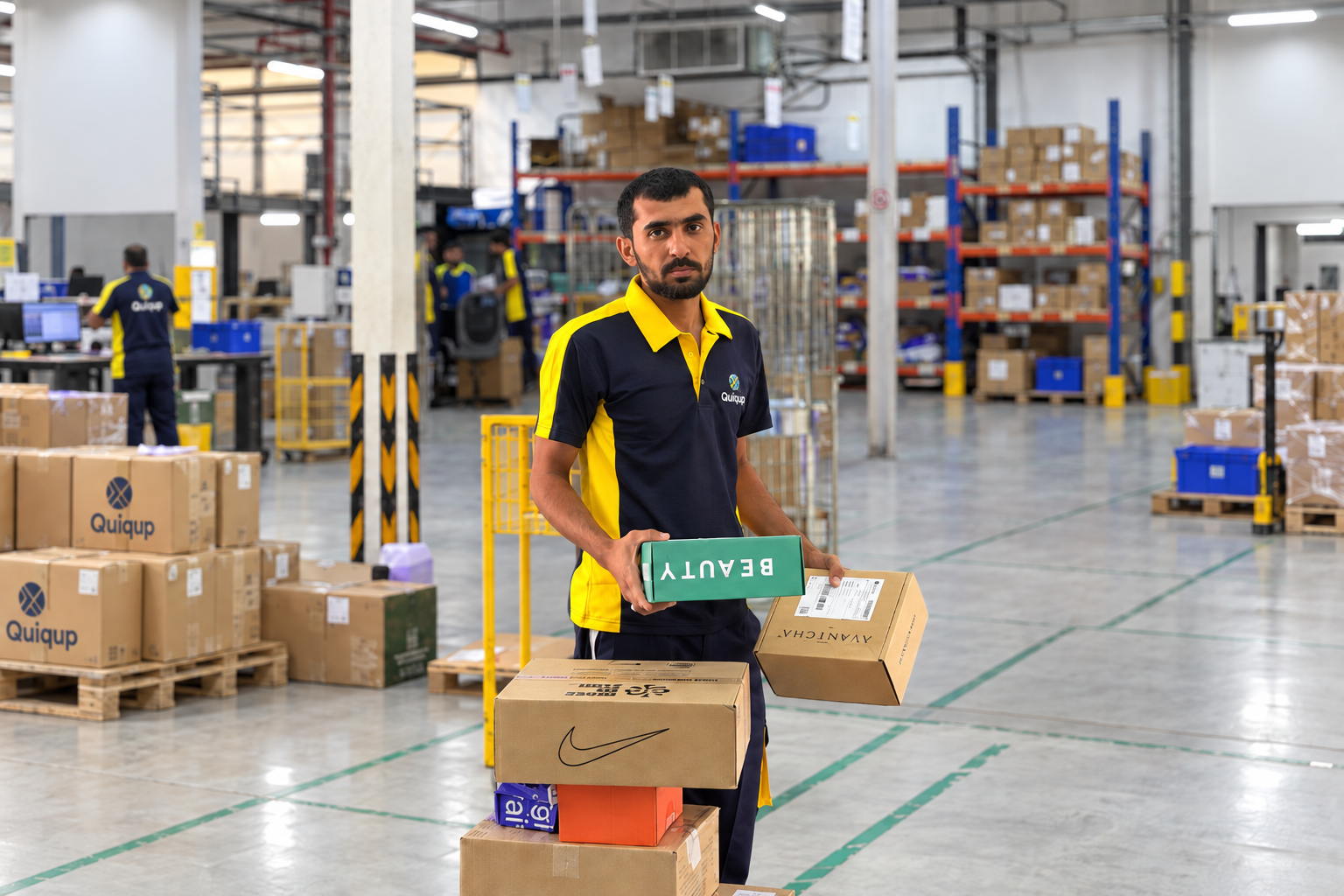
A partner like Quiqup operates in the execution layer of cross-border delivery:
- structured pickup from UAE warehouses
- line-haul coordination by lane
- integration with local last-mile partners
- operational visibility across delivery stages
DDP or DAP doesn’t work in isolation. The model only performs if the logistics setup supports it consistently — including data quality, documentation flow, and exception handling across borders.
Decision guide for UAE brands
Smaller UAE brands (testing international demand)
Choose DAP when:
- you’re validating demand
- margins are tight
- products are low-risk
- checkout clearly explains possible duties and VAT
Choose DDP when:
- you’re investing in paid acquisition
- refusals or customs holds are increasing
- repeat purchase matters
- trust outweighs short-term margin protection
Larger UAE brands (scaling lanes)
Default to DDP for:
- core KSA SKUs
- EU and UK lanes where conversion and trust are critical
- high-volume products with predictable customs treatment
Use DAP selectively for:
- complex or heavily regulated categories
- low-margin SKUs
- secondary lanes where friction is an accepted trade-off
Final takeaway
If your goal is lower cart abandonment and fewer failed deliveries, DDP usually performs better because it removes uncertainty from the buying experience.
DAP still has a place when you’re testing markets or protecting margin early. But scaling DAP without clear transparency almost always shows up later — in higher refusal rates, heavier support load, and slower growth.
Incoterms don’t just affect shipping.
They shape expectations — and expectations convert.






.png)