.png)
Quiqup vs Aramex: Choosing the Right Delivery Partner for UAE E-Commerce
Choosing between Quiqup and Aramex isn’t about which company is “better.”
It’s about which operating model matches how your e-commerce business actually runs.
Both are established logistics providers in the UAE, but they are built for very different use cases. Brands that struggle after choosing usually don’t fail on price — they fail on delivery expectations, handovers, and operational fit.
This comparison looks at Quiqup vs Aramex through an e-commerce lens: delivery speed, fulfilment setup, integrations, and where each partner makes sense.
Quiqup and Aramex Serve Different E-Commerce Needs
At a high level, the difference is structural.
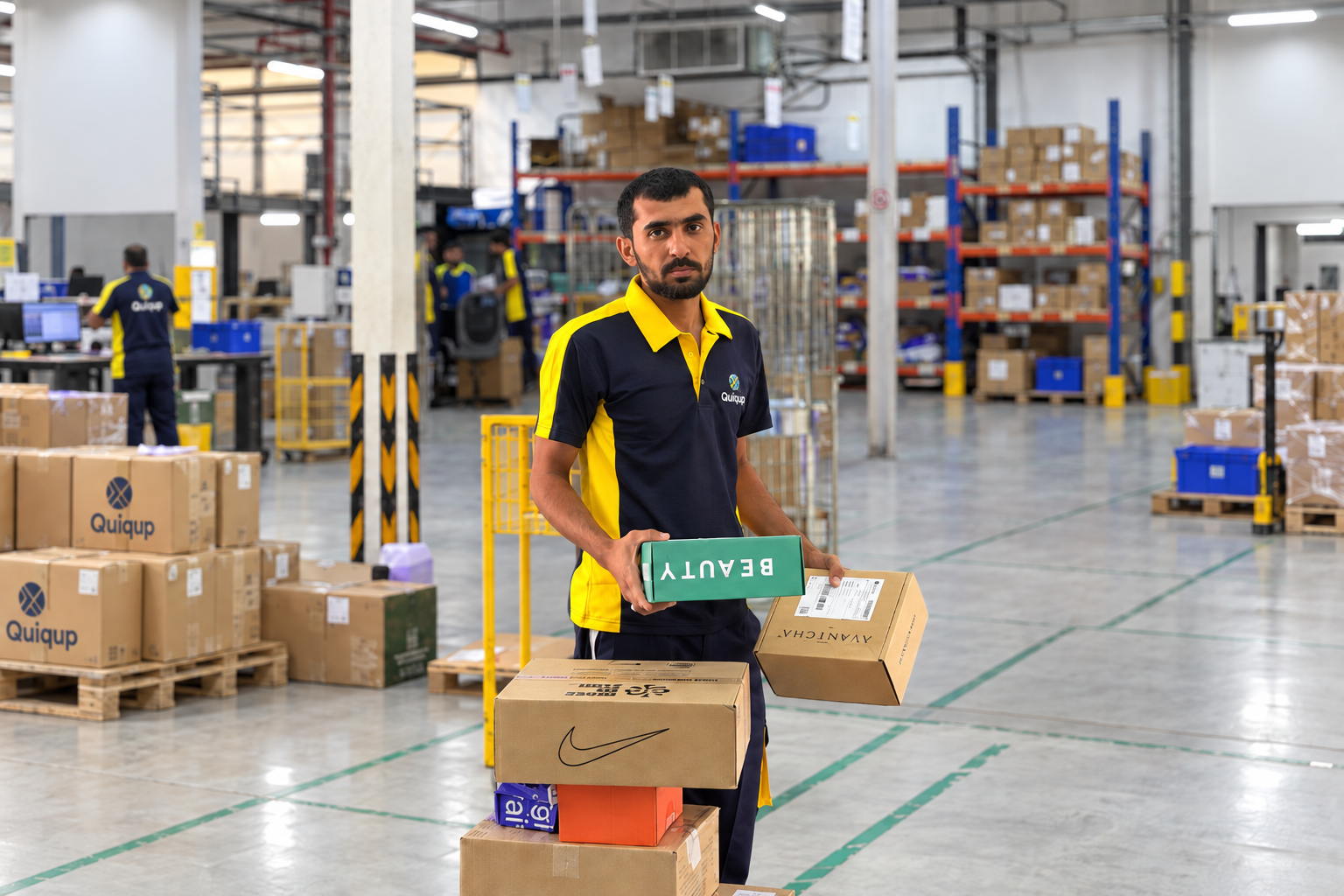
Quiqup is designed around e-commerce delivery speed and fulfilment-to-last-mile integration within the UAE.
Aramex is designed around regional logistics, scale, and contract-led supply chains, where e-commerce is one of several use cases.
That difference explains most of the trade-offs below.
Delivery Speed and Same-Day Fulfilment
Quiqup: Speed-First by Design
Quiqup’s delivery model is built around same-day and next-day delivery within the UAE, with cut-off times closely aligned to warehouse dispatch and courier handover.
This suits businesses where:
- delivery speed influences conversion
- orders arrive continuously during the day
- missed cut-offs directly affect refunds, cancellations, or repeat purchase
The key strength is tight coordination between fulfilment and last-mile delivery, which reduces handovers and ambiguity under time pressure.
Aramex: Scale and Coverage First
Aramex supports a wide range of delivery services across the UAE and internationally, with strong regional coverage and infrastructure.
Same-day delivery is available in certain contexts, but it is not the primary design focus of Aramex’s operating model. The emphasis is on consistency, coverage, and predictable flows rather than minute-level optimisation.
In practice:
If same-day delivery is a core growth lever, Quiqup tends to fit better.
If reliable delivery at scale matters more than speed, Aramex is often sufficient.
Fulfilment Models: Integrated vs Contract Logistics
Quiqup Fulfilment
Quiqup offers e-commerce fulfilment in the UAE, covering storage, picking, packing, delivery, and returns as one connected flow.
The fulfilment setup is designed for:
- daily order velocity
- short batching cycles
- fast dispatch tied directly to delivery cut-offs
This works well for D2C brands where fulfilment and delivery need to behave like one system, not separate vendors.
Aramex Warehousing and Logistics
Aramex provides contract logistics and warehousing, where e-commerce fulfilment is one use case among many.
This model fits:
- pallet-based inventory
- mixed B2B, retail, and e-commerce operations
- long-term, contract-driven logistics programs
E-commerce pick-and-pack can be supported, but flexibility and speed are usually secondary to scale and governance.
Tech Stack and Platform Integrations
Quiqup
Quiqup integrates directly with common e-commerce platforms such as Shopify and WooCommerce, focusing on:
- automated order import
- real-time status updates
- clear linkage between fulfilment and delivery tracking
This reduces manual work for lean D2C teams and supports faster iteration.
Aramex
Aramex offers APIs and enterprise-grade integrations, typically as part of broader logistics or IT programs.
These integrations:
- are more configurable
- require longer onboarding cycles
- suit organisations with dedicated technical resources
This is appropriate for larger, structured environments.
COD, Returns, and Customer Experience
Quiqup
Quiqup’s workflows are designed around COD-heavy UAE e-commerce, with:
- doorstep payment handling
- rapid reattempts
- quick return-to-warehouse cycles
Faster delivery and returns reduce refusal rates and shorten cash cycles.
Aramex
Aramex handles COD and returns at scale, usually within broader contract logistics flows.
Return cycles are typically more structured and less optimised for rapid D2C experimentation, which is acceptable for stable operations but less flexible for fast-moving brands.
Pricing and Commercial Structure (High-Level)
Comparing Quiqup and Aramex purely on per-order cost often misses the real trade-offs.
- Quiqup’s commercial model reflects speed, flexibility, and tight fulfilment-delivery coordination.
- Aramex’s pricing reflects scale, coverage, and contract-led logistics programs.
The real cost difference often shows up in:
- missed cut-offs
- failed deliveries
- refunds and support overhead
Not in the rate card.
When Quiqup Is the Better Fit
Quiqup tends to work best if:
- you run a D2C e-commerce brand
- same-day or next-day delivery affects conversion
- fulfilment speed matters as much as delivery
- you want fewer operational handovers
- your team needs fast onboarding and iteration
When Aramex Is the Better Fit
Aramex is often a better choice if:
- you operate regionally across the GCC or beyond
- volumes are high and predictable
- you mix B2B, retail, and e-commerce flows
- you want one logistics partner across multiple functions
- governance and scale matter more than speed
Can Brands Use Both?
Yes — and many do.
A common setup:
- Quiqup for UAE D2C fulfilment and fast local delivery
- Aramex for regional shipping, cross-border, or bulk flows
This works only when inventory sync and order-routing rules are clearly defined.
Final Verdict: It’s About Operating Model Fit
This isn’t a head-to-head contest. It’s a fit decision.
If your e-commerce business wins on speed, convenience, and customer experience, Quiqup usually aligns better.
If it wins on scale, coverage, and structured logistics, Aramex is often the safer choice.
The real mistake isn’t choosing the wrong provider — it’s choosing a provider whose operating model doesn’t match how you actually sell.







.png)