.png)
Quiqup vs Ajeek: Choosing the Right Delivery Partner for UAE E-Commerce
If you’re comparing Quiqup and Ajeek, you’re likely deciding between an integrated fulfilment-plus-delivery model and a delivery-focused last-mile provider.
Both operate in the UAE and support e-commerce shipments. The real difference isn’t whether they can move parcels — it’s how deeply delivery is connected to fulfilment, tech systems, and scaling operations.
This breakdown compares Quiqup vs Ajeek across delivery speed, fulfilment capabilities, integrations, COD handling, and operational fit.
High-Level Positioning: Integrated Model vs Delivery-First Model
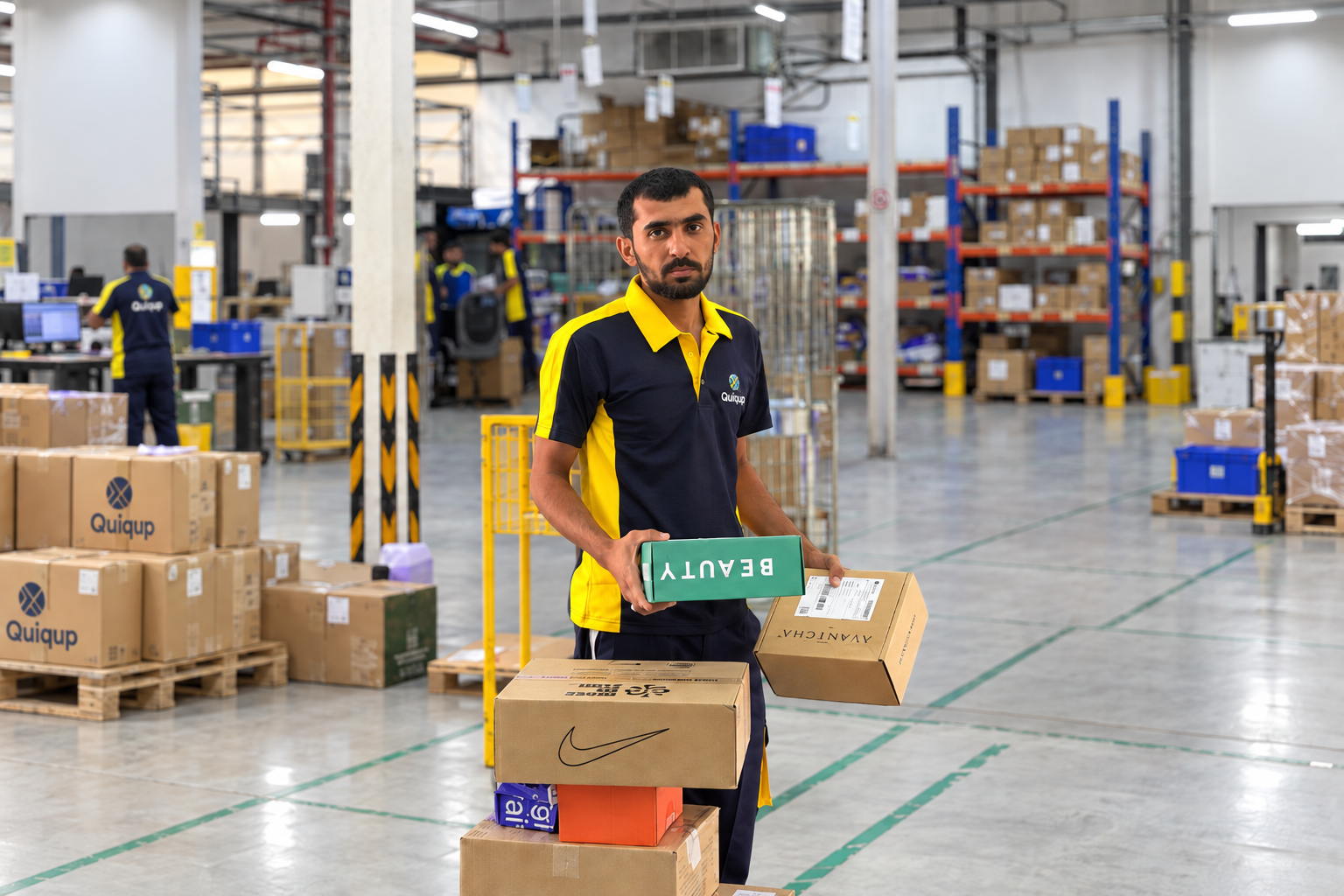
Quiqup positions as an e-commerce fulfilment and delivery provider in the UAE, offering warehousing, pick & pack, last-mile delivery, and returns within a connected workflow.
Ajeek is primarily positioned as a UAE courier and last-mile delivery company, offering domestic delivery services tailored to businesses and online sellers.
In simplified terms:
- Quiqup = fulfilment + last-mile built for e-commerce workflows
- Ajeek = courier-first delivery service for local shipments
That structural difference drives most of the trade-offs below.
Delivery Speed and Same-Day Capabilities
Quiqup: Delivery Speed Designed Around Cut-Off Discipline
Quiqup supports same-day and next-day delivery in the UAE, with cut-offs aligned to fulfilment dispatch. Because fulfilment and delivery are coordinated, the system is built to hit tight handover times consistently.
This is particularly relevant when:
- delivery speed affects checkout conversion
- same-day promises are marketed in Dubai or major Emirates
- failed cut-offs create refunds or customer complaints
Delivery speed is supported operationally — not just offered as a courier option.
Ajeek: Domestic Delivery Focus
Ajeek focuses on domestic last-mile delivery services across the UAE, typically offering express and next-day options suited to local sellers.
This works well when:
- delivery speed is important but not integrated with warehouse workflows
- fulfilment is managed internally
- volumes are moderate and predictable
If fulfilment and delivery are separate functions, Ajeek can serve as the courier layer.
Fulfilment and Warehousing Depth
Quiqup Fulfilment
Quiqup offers full e-commerce fulfilment services in the UAE, including:
- inventory storage
- pick & pack
- dispatch aligned to delivery SLAs
- returns processing and reintegration
This suits brands that:
- ship daily
- manage growing SKU catalogues
- need structured COD and returns handling
- want fewer handovers between warehouse and courier
Fulfilment is central to the model, not secondary.
Ajeek and Fulfilment
Ajeek’s primary positioning is delivery rather than deep e-commerce fulfilment infrastructure.
For brands that:
- manage their own warehouse
- operate smaller SKU ranges
- require straightforward dispatch
Ajeek can operate effectively as the courier component.
For brands requiring integrated pick-pack-return workflows, additional fulfilment infrastructure may be needed beyond courier services.
Tech Stack and Integrations
Quiqup
Quiqup integrates with common e-commerce platforms such as Shopify and WooCommerce, supporting:
- automated order import
- real-time tracking updates
- delivery status visibility within a unified system
This reduces manual reconciliation and supports scaling operations.
Ajeek
Ajeek provides shipment tracking and operational tools for managing deliveries and COD collections.
This supports:
- order-level visibility
- courier-level tracking
However, integration depth depends more on the merchant’s internal warehouse and system setup.
COD Handling and Returns
Quiqup
Quiqup is structured around COD-heavy UAE e-commerce, offering:
- doorstep cash collection
- reattempt management
- fast return-to-warehouse processes
Because returns are routed back into the same fulfilment environment, restocking can happen more quickly.
Ajeek
Ajeek supports COD delivery as part of its courier services.
This works well when:
- COD volumes are manageable
- return-to-stock speed is not operationally critical
- fulfilment is handled separately
As order volume grows, coordination between courier and warehouse becomes more complex.
Pricing and Commercial Structure
Direct rate comparison rarely tells the full story.
- Quiqup’s model reflects integrated fulfilment, delivery speed, and operational coordination.
- Ajeek’s model reflects domestic courier pricing and local delivery services.
The real difference shows up in:
- internal operational overhead
- missed cut-offs
- return processing speed
- cash cycle efficiency
Courier pricing alone doesn’t reflect system efficiency.
When Quiqup Is the Better Fit
Quiqup is generally better suited when:
- you run a growing D2C e-commerce brand
- fulfilment and delivery need to scale together
- same-day delivery is part of your marketing promise
- COD and returns volumes are increasing
- you want fewer operational touchpoints
When Ajeek Is the Better Fit
Ajeek can be appropriate when:
- you manage your own warehouse
- delivery needs are straightforward and domestic
- volumes are stable
- you want a courier-first solution without integrated fulfilment complexity
Can Brands Use Both?
Yes.
Some brands:
- use Quiqup for fulfilment and primary D2C delivery, and
- use Ajeek for specific domestic routes or overflow capacity
This only works with clear routing rules and inventory visibility.
Final Verdict: Quiqup vs Ajeek
This isn’t about who can deliver a parcel faster in isolation.
It’s about whether you need delivery alone or delivery tightly integrated with fulfilment.
If your e-commerce growth depends on speed, cut-off discipline, and structured returns, Quiqup typically aligns better.
If you need a reliable domestic courier while managing fulfilment independently, Ajeek may be sufficient.
The right choice depends on whether delivery is just transportation — or a core part of your e-commerce experience.







.png)