.png)
Quiqup vs Careem Box: Which Delivery Model Fits Your E-Commerce Strategy?
When UAE businesses compare Quiqup and Careem Box, they are usually comparing two very different logistics models.
One is designed for structured e-commerce fulfilment and delivery.
The other is designed for fast, on-demand urban parcel movement.
Both can move packages. But they serve very different use cases.
This comparison breaks down Quiqup vs Careem Box across delivery model, fulfilment depth, scalability, COD handling, technology, and long-term fit for e-commerce brands in the UAE.
High-Level Positioning
At a structural level:
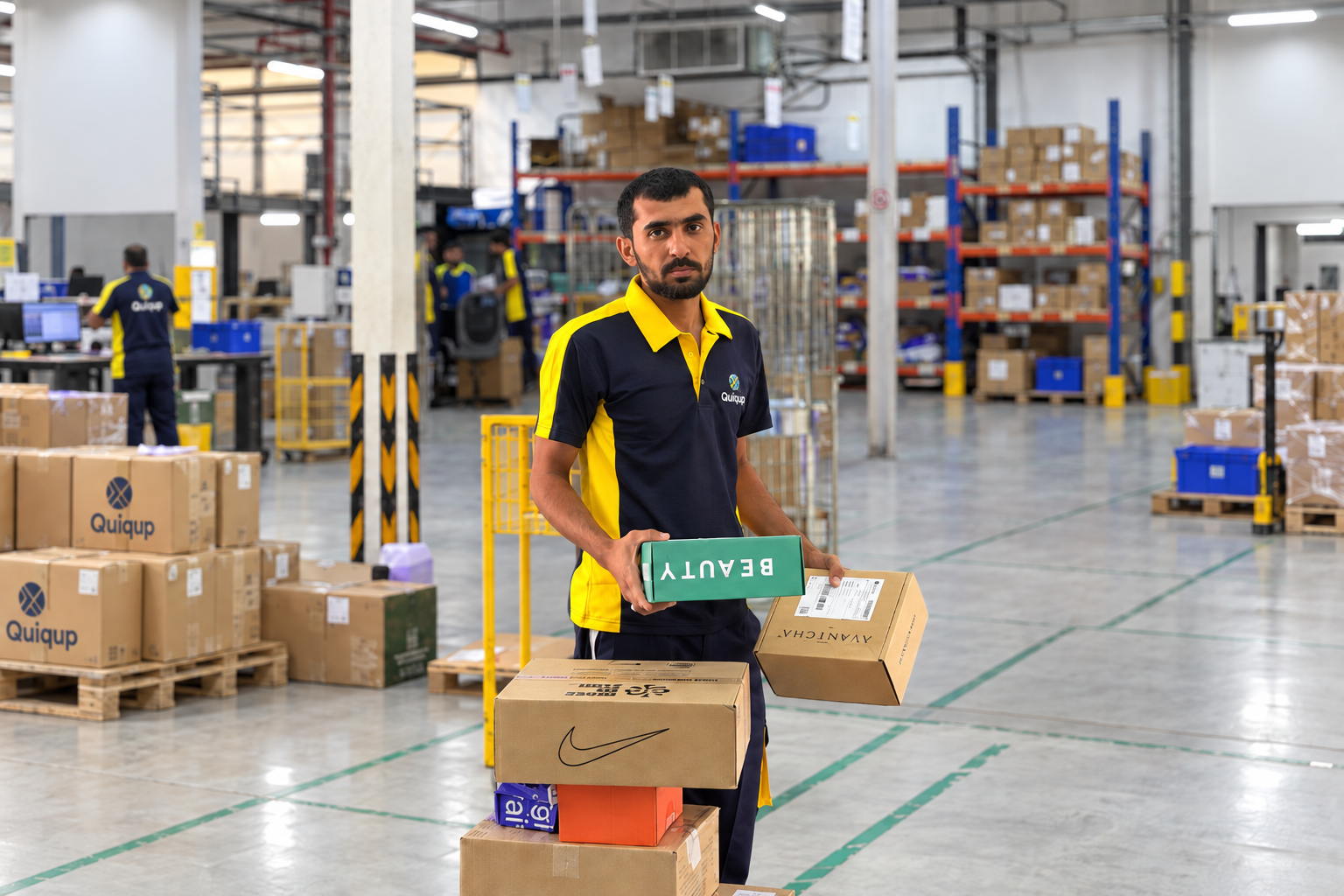
- Quiqup is an e-commerce fulfilment and last-mile delivery provider in the UAE. It integrates warehousing, pick & pack, delivery, and returns into a single system.
- Careem Box is an on-demand delivery service designed for quick intra-city parcel movement, often used for urgent local deliveries.
In simple terms:
- Quiqup = structured fulfilment + scalable e-commerce delivery
- Careem Box = on-demand point-to-point courier solution
The difference is not speed alone — it’s about system design.
Delivery Model: Structured vs On-Demand
Quiqup: SLA-Based E-Commerce Delivery
Quiqup operates on structured delivery SLAs (same-day, next-day, scheduled windows), with dispatch aligned to warehouse cut-offs.
This works best when:
- orders flow daily
- cut-offs matter
- delivery performance impacts conversion
- you need tracking, returns, and COD at scale
The model is built for repeatable e-commerce operations.
Careem Box: On-Demand Urban Delivery
Careem Box is built around:
- immediate pickup
- rapid intra-city delivery
- flexible dispatch via app
This suits:
- urgent document delivery
- last-minute same-city shipments
- businesses without formal fulfilment workflows
It’s closer to an on-demand courier than a structured e-commerce logistics system.
Fulfilment and Warehousing Depth
Quiqup Fulfilment
Quiqup offers:
- inventory storage
- pick & pack
- dispatch coordination
- structured returns handling
This supports:
- growing SKU catalogues
- daily D2C shipping
- promotional volume spikes
- COD-heavy flows
Fulfilment is central to the service.
Careem Box and Fulfilment
Careem Box does not operate as a fulfilment or warehousing provider.
Merchants must:
- manage inventory themselves
- prepare packages before booking
- handle returns separately
For small businesses with limited volume, this may be sufficient. For scaling e-commerce brands, additional infrastructure is needed.
Delivery Speed vs Scalability
Quiqup
Supports:
- same-day
- next-day
- scheduled deliveries
But speed is delivered within a structured system, meaning:
- cut-offs are defined
- batching is planned
- capacity is forecasted
This ensures consistency during peaks (weekends, Ramadan, sales).
Careem Box
Speed is immediate and flexible.
However:
- pricing is typically per trip
- scalability during high-volume campaigns can become costly
- there is no built-in warehouse coordination
Careem Box is excellent for one-off urgency.
It is less suited for hundreds of daily e-commerce orders.
COD and Payment Handling
Quiqup
Quiqup supports structured COD handling, including:
- doorstep payment collection
- reattempt management
- reconciliation processes
- return-to-warehouse flows
This is critical in the UAE, where COD remains common.
Careem Box
Careem Box is not designed as a full COD infrastructure solution for e-commerce.
While cash delivery may be possible in certain scenarios, it is not built around structured COD reconciliation and returns workflows.
For COD-heavy brands, operational complexity increases significantly without a structured system.
Technology and Integration
Quiqup
Quiqup integrates with major e-commerce platforms such as:
- Shopify
- WooCommerce
It supports:
- automated order import
- unified tracking
- fulfilment-to-delivery visibility
This reduces manual operations and scales better with volume.
Careem Box
Careem Box operates via:
- app-based booking
- manual dispatch
- point-to-point tracking
This is efficient for individual shipments, but not built for automated e-commerce order syncing at scale.
Pricing Structure
Quiqup
Pricing reflects:
- fulfilment
- delivery SLA
- returns handling
- operational coordination
It is designed for structured e-commerce businesses.
Careem Box
Pricing is typically:
- per trip
- distance-based
- surge-sensitive depending on demand
This works well for occasional urgent shipments but can become expensive for high-volume daily operations.
When Quiqup Is the Better Fit
Quiqup is typically better suited when:
- you run a D2C e-commerce store
- same-day or next-day delivery impacts conversion
- you need integrated fulfilment and delivery
- COD and returns are significant
- volume is growing
When Careem Box Is the Better Fit
Careem Box may be appropriate when:
- you need urgent, one-off intra-city delivery
- shipment volumes are low
- fulfilment is handled internally
- speed is immediate rather than SLA-driven
Can Businesses Use Both?
Yes.
Some brands:
- use Quiqup for structured daily e-commerce operations, and
- use Careem Box for urgent same-day local deliveries or emergency shipments
The key is not confusing an on-demand courier model with a scalable e-commerce logistics system.
Final Verdict: Quiqup vs Careem Box
This is not a contest of who can deliver faster in a single instance.
It’s a comparison between:
- A structured, scalable e-commerce fulfilment + delivery system (Quiqup)
- An on-demand urban courier service (Careem Box)
If your business depends on predictable cut-offs, COD handling, and scalable daily dispatch, Quiqup is usually the stronger long-term solution.
If you need quick point-to-point city delivery for occasional shipments, Careem Box can be a practical tool.
The right choice depends on whether you’re running structured e-commerce — or simply sending parcels across town.





.png)