.png)

Multi-Warehouse Inventory Management in the UAE (Guide for Dubai & All Emirates)
Managing inventory in one warehouse is manageable.
Managing it across multiple locations—different emirates, free zones, retail hubs, or 3PLs—is where things start to break.
Stock goes out of sync. Transfers get messy. Orders get routed incorrectly. Reporting stops matching reality.
For UAE ecommerce and retail businesses, multi-warehouse inventory management isn’t optional once you scale. It’s required to maintain delivery speed, availability, and operational control.
Why multi-warehouse inventory management is hard in the UAE
The complexity is not just technical. It’s operational.
Inventory mismatches across locations
The same SKU might show:
- available in one system
- out of stock in another
- reserved somewhere else
Without real-time synchronization, accuracy drops fast.
Distributed operations across emirates and zones
Inventory is often spread across:
- Dubai warehouses
- Abu Dhabi or Sharjah storage
- free zones like JAFZA or Dubai South
- retail locations
Each node behaves differently, but needs to stay aligned.
Fulfilment and routing errors
Orders need to be assigned to the right location based on:
- proximity to customer
- stock availability
- delivery speed
Without proper routing logic, orders are:
- shipped from the wrong warehouse
- delayed unnecessarily
- or split inefficiently
Manual processes don’t scale
Spreadsheets might work early on.
They fail when:
- order volume increases
- SKUs expand
- multiple warehouses are added
Manual updates create delays and errors.
What a multi-warehouse inventory system should do
A proper system doesn’t just track stock. It controls how inventory moves and how orders are fulfilled.
Real-time inventory visibility
You need one view of stock across all locations.
That includes:
- available inventory
- reserved stock
- inbound shipments
- transfers in progress
Without this, decision-making becomes reactive.
Multi-warehouse controls (transfers, routing, allocation)
Core capabilities:
- transfer stock between warehouses
- track movement history
- assign orders to the best location
Transfers should include:
- request → approval → dispatch → receipt
- timestamps and audit logs
- reason codes (rebalancing, stockout prevention, etc.)
Barcode-enabled operations
Barcode scanning should cover:
- receiving
- putaway
- picking
- packing
- shipping
This reduces manual errors and improves speed.
Receiving and putaway optimization
When stock arrives:
- it should be scanned and verified
- assigned to optimal storage locations
Good systems support:
- slotting based on SKU velocity
- guided putaway processes
Picking, packing, and dispatch workflows
As volume grows, picking becomes a bottleneck.
Systems should support:
- batch picking (multiple orders together)
- zone picking (by warehouse sections)
- wave picking (time-based grouping)
Packing should include:
- scan-to-verify processes
- automated label generation
- courier integration
Batch, lot, serial, and expiry tracking
Important for:
- cosmetics
- food
- supplements
- electronics
Capabilities include:
- tracking by batch or serial number
- expiry date monitoring
- FIFO (first-in, first-out) enforcement
- alerts for expiring stock
Cycle counts and audits
Inventory accuracy depends on continuous checks.
Instead of full stocktakes, systems should support:
- cycle counting
- real-time adjustments
- audit trails for every change
Reporting and analytics
You need both operational and financial visibility.
Key outputs:
- stock levels by location
- inventory valuation
- movement history
- turnover rates
For UAE businesses, reporting should also support:
- VAT-related documentation
- audit-ready logs
Integrations ecosystem
Your inventory system must connect with:
- ecommerce platforms (Shopify, WooCommerce, Magento)
- marketplaces (Amazon, Noon)
- ERP and accounting systems
- shipping and courier platforms
Disconnected systems create delays and inconsistencies.
Access and usability
Warehouse teams need:
- mobile-friendly interfaces
- barcode scanning tools
- simple workflows
In the UAE context, multilingual support (English/Arabic) can also be relevant depending on teams.
UAE-specific considerations
Global systems don’t always account for local realities.
Multi-location operations across free zones
Many UAE businesses operate across:
- mainland
- free zones
- retail and warehouse locations
This creates:
- multiple legal entities or setups
- operational complexity
- transfer requirements between zones
Your system needs to handle this cleanly.
Compliance and reporting
Inventory systems should support:
- accurate stock valuation
- transaction logs
- audit trails
This becomes important for:
- financial reporting
- tax compliance
- internal controls
Temperature-sensitive inventory
Some businesses require:
- climate-controlled storage
- monitoring conditions
- tracking storage location constraints
Not all systems handle this natively.
WMS vs inventory system vs managed services
There’s often confusion between these categories.
Warehouse Management System (WMS)
Focus: execution inside the warehouse.
Covers:
- receiving
- putaway
- picking
- packing
- dispatch
Best for businesses with operational complexity.
Inventory management system
Focus: stock control across locations.
Covers:
- inventory tracking
- purchasing
- reporting
- multi-location visibility
Less focused on physical workflows.
Managed inventory services (3PL model)
Here, the system is combined with operations.
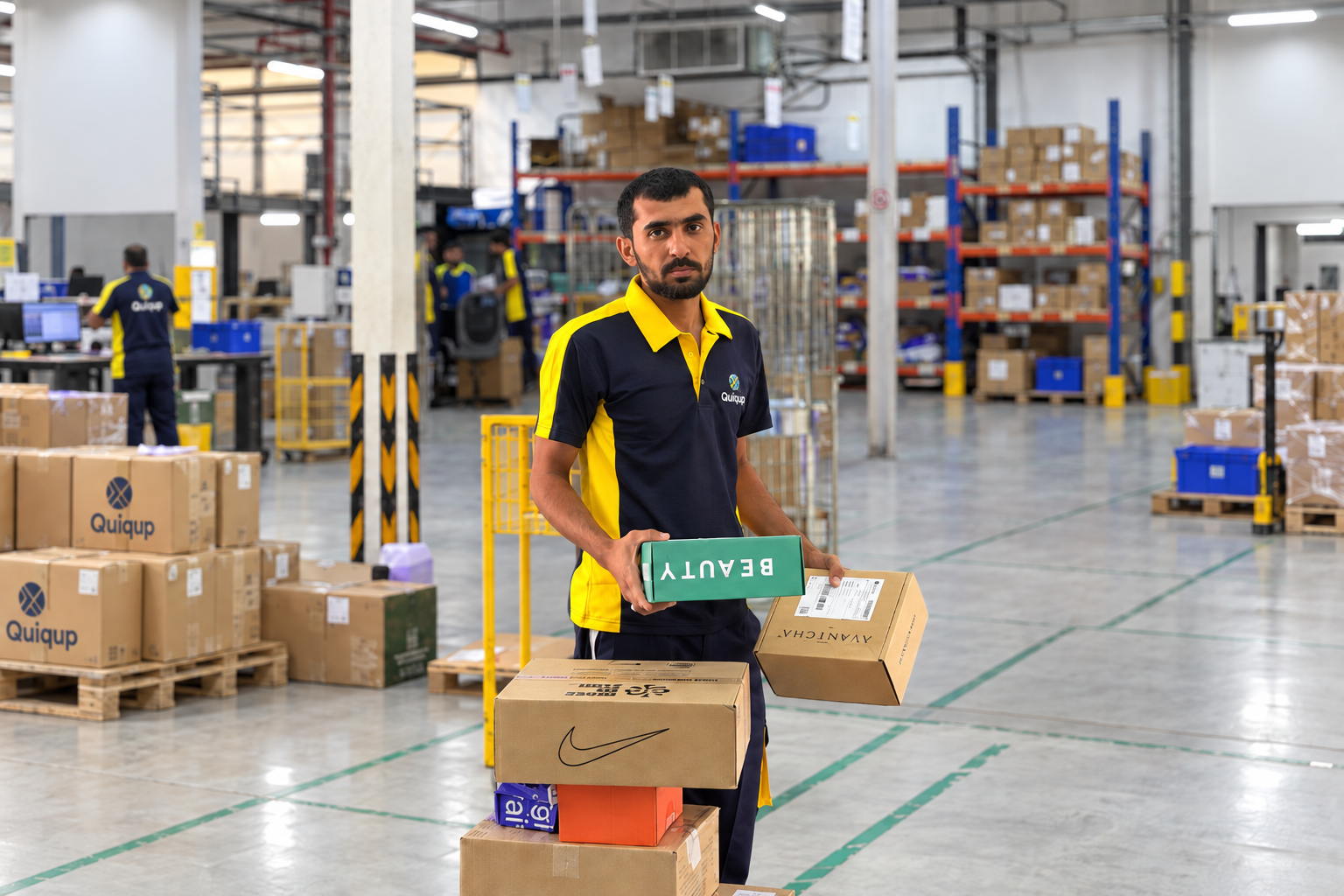
A provider like Quiqup handles:
- storage
- inventory management
- fulfilment
- delivery
You get dashboards and visibility, but execution is outsourced.
This works well when you don’t want to build internal warehouse capabilities.
How to evaluate vendors (buyer’s checklist)
Choosing a system or partner requires more than feature comparison.
Integration requirements
Ask:
- does it connect to your ecommerce platform?
- can it sync with ERP or accounting tools?
- how reliable is data syncing?
Deployment model
Options include:
- cloud-based (most common)
- on-premise (less common)
- hybrid setups
Cloud systems are usually faster to deploy and easier to scale.
Customization and scalability
Check:
- can it support multiple warehouses?
- can workflows be adapted to your operations?
- will it handle growth?
Total cost of ownership
Look beyond license cost:
- implementation
- training
- support
- upgrades
Cheap systems often become expensive over time.
Operational capability questions
- does it support barcode scanning end-to-end?
- how are transfers tracked and approved?
- can it handle batch and expiry tracking?
- does it integrate with couriers?
- how strong is reporting?
Example workflow: multi-warehouse operations in practice
Inbound (receiving and putaway)
- goods arrive at warehouse
- quantities are verified
- items are scanned and stored
- system updates stock levels
Storage and replenishment
- stock is monitored across locations
- alerts trigger when levels drop
- replenishment decisions are made
Inter-warehouse transfers
- warehouse A requests stock
- approval is given
- transfer is dispatched
- receiving warehouse confirms arrival
All steps should be logged.
Outbound fulfilment
- order is assigned to optimal warehouse
- items are picked and packed
- shipping labels are generated
- order is handed to courier
With integrated setups like Quiqup, this step connects directly to delivery—reducing delays.
Returns and reverse logistics
- customer initiates return
- item is collected or received
- inspected and categorized
- restocked or removed
Returns must be reflected in inventory immediately.
Common FAQs
What is a WMS?
A Warehouse Management System controls operations inside a warehouse, including receiving, storage, picking, and shipping.
Can I manage multiple warehouses from one system?
Yes. Modern systems are designed to centralize inventory across multiple locations with real-time updates.
Does it integrate with ecommerce and shipping platforms?
Most systems integrate with major ecommerce platforms and can connect to courier systems for shipping and tracking.
Do I need a large warehouse to use a WMS?
No. Even smaller operations benefit from structured systems once complexity increases.
Can I track batches and expiry dates?
Yes. Many systems support batch, lot, and expiry tracking with alerts and reporting.
Does it work on mobile devices?
Most modern solutions include mobile access or scanning tools for warehouse staff.
How long does setup take?
It depends on complexity, but basic implementations can take days to weeks. Larger setups take longer due to data and process alignment.
Multi-warehouse inventory management is not just about tracking stock.
It’s about control.
Control over:
- where inventory sits
- how it moves
- how orders are fulfilled
In the UAE, where delivery speed and reliability matter, inventory decisions directly affect customer experience.
The right setup depends on your stage:
- early → simple inventory tools
- scaling → structured multi-warehouse systems
- advanced → integrated 3PL + delivery setups
If inventory and fulfilment are not aligned, operations become reactive.
When they are aligned, the system becomes predictable—and scalable.








.png)