.png)

Ecommerce Customer Retention Through Delivery: What to Fix in Shipping, Tracking, and Returns
Customer retention in ecommerce is often treated as a marketing problem.
Emails, discounts, loyalty programs — all important. But they miss something more fundamental.
For most customers, the delivery experience is the last real interaction with your brand before they decide whether to come back or not.
If delivery is late, unclear, or frustrating, it overrides everything that came before it. If it’s smooth, predictable, and well communicated, it builds trust and repeat behavior.
Retention doesn’t just happen at checkout. It’s shaped after the order is placed.
What ecommerce customer retention means
Customer retention is simply the ability to keep customers coming back.
It’s usually measured as the percentage of customers who return and buy again over a given period.
But in practice, it’s about something more concrete:
- did the customer have a good enough experience to trust you again?
- did anything break between purchase and delivery?
Delivery is where many retention problems show up:
- missed delivery promises
- poor tracking visibility
- failed deliveries
- difficult returns
These are not small issues. They directly affect whether a customer buys again.
Key retention metrics to track
Before improving delivery, you need to measure what’s happening today.
Customer retention rate
This measures how many customers you keep over time.
Formula:
(Customer at end of period − New customers) / Customers at start of period × 100
Example:
- Start: 1,000 customers
- End: 1,200 customers
- New: 300 customers
Retention = (1,200 − 300) / 1,000 = 90%
Repeat purchase rate (RPR)
This shows how many customers buy more than once.
A high RPR usually means:
- customers trust the experience
- delivery expectations are being met
Customer lifetime value (CLV)
CLV measures how much revenue a customer generates over time.
Delivery improvements often increase CLV by:
- reducing churn
- increasing order frequency
Churn rate
Churn is the opposite of retention.
It shows how many customers stop buying.
Delivery issues often increase churn, especially after first purchase.
NPS and delivery feedback
Net Promoter Score (NPS) measures how likely customers are to recommend your brand.
Delivery is one of the biggest drivers of negative feedback.
Sending a short survey after delivery gives a clear signal of what’s working.
Cohort retention analysis
Instead of looking at averages, break customers into groups.
For example:
- customers delivered same-day vs next-day
- customers served by different couriers
- customers with vs without returns
This helps identify exactly where delivery impacts retention.
Benchmarks: what “good” retention looks like
Retention varies by category, but general benchmarks are:
- ecommerce retention: 20%–40%
- repeat purchase rate: around 25%–30%
- subscription businesses: 40%–60%+
These are directional, not absolute.
What matters more is improvement over time — especially after operational changes.
Delivery expectations that drive retention
Customers don’t compare your delivery experience to your competitors. They compare it to the best experience they’ve ever had.
Core expectations include:
- fast delivery
- reliable delivery windows
- affordable shipping
- clear tracking
- simple returns
If any of these break, retention drops.
6 delivery strategies to increase customer retention
This is where delivery becomes a growth lever.
1) Offer flexible and convenient shipping options
Customers want choice.
Examples:
- same-day vs next-day
- scheduled delivery windows
- different delivery speeds
If customers don’t find a suitable option, they may not even complete checkout.
More importantly, lack of flexibility reduces repeat purchases.
2) Hit your promised dispatch times consistently
Speed matters, but consistency matters more.
If you promise next-day dispatch, you need to hit it every time.
Missed dispatch leads to:
- delayed delivery
- support tickets
- loss of trust
This is where operational setup matters. Fulfilment and delivery need to work as one system.
3) Manage inventory to avoid stockouts
Stockouts don’t just affect sales — they affect retention.
If customers can’t reorder what they want:
- they go elsewhere
- they may not come back
Simple improvements:
- real-time inventory tracking
- back-in-stock notifications
- better demand planning
4) Turn tracking into a real experience
Tracking is not just a feature. It’s a communication channel.
Basic tracking is not enough anymore.
Customers expect:
- clear delivery timeframes
- live updates
- proactive notifications for delays
- ability to manage delivery
Poor tracking leads to uncertainty.
Uncertainty leads to support requests and lost trust.
Strong tracking reduces “Where is my order?” queries and increases confidence.
5) Use returns as a retention tool
Returns are often seen as a cost problem.
But they’re also a trust builder.
If customers know returns are simple:
- they are more likely to buy
- they are more likely to return
Key elements:
- clear return policy
- easy return initiation
- fast refunds
- visibility into return status
A bad return experience often guarantees a lost customer.
A good one can actually increase loyalty.
6) Communicate sustainability clearly
More customers care about how products are delivered.
Sustainable delivery practices can improve retention when communicated properly.
Examples:
- consolidated deliveries
- reduced packaging
- efficient routing
It’s not just about being sustainable — it’s about making it visible.
Service delivery beyond shipping: support and communication
Delivery doesn’t exist in isolation.
It’s tightly connected to customer support.
Proactive support reduces churn
Most delivery-related support requests are predictable:
- delays
- failed deliveries
- incorrect addresses
Proactive communication reduces support load.
For example:
- notify customers before delays happen
- confirm delivery windows
- send updates without being asked
This builds trust and reduces frustration.
Use delivery moments for engagement
Post-purchase communication is often underused.
Key moments:
- order confirmation
- dispatch notification
- in-transit updates
- delivery confirmation
These moments can also be used for:
- product tips
- cross-sell suggestions
- reorder reminders
Delivery is not the end of the journey. It’s a transition point.
Personalization and loyalty on top of delivery
Once delivery works reliably, you can layer additional retention strategies.
Personalization
Customers expect tailored experiences.
This can include:
- preferred delivery options
- personalized offers
- reorder reminders
Loyalty programs
Rewards and incentives increase repeat purchases.
But they only work if the delivery experience is solid.
Otherwise, incentives can’t compensate for poor execution.
Subscription and replenishment models
Subscriptions increase retention but depend heavily on delivery reliability.
Customers expect:
- predictable delivery timing
- easy pause or skip options
- flexibility
If delivery fails, churn increases quickly.
Common retention pitfalls related to delivery
Overpromising delivery times
One of the most common mistakes is promising delivery speeds that can’t be maintained.
It’s better to:
- set realistic expectations
- deliver slightly faster than promised
Poor communication during delays
Delays happen.
The problem is silence.
Customers tolerate delays better than uncertainty.
Treating delivery as an operational detail
Many businesses focus on acquisition and ignore delivery.
But delivery is part of the product experience.
Ignoring it leads to long-term retention issues.
Practical measurement plan: linking delivery to retention
To improve retention, connect delivery performance to customer behavior.
Track:
- retention rate before and after delivery changes
- repeat purchase rate by delivery speed
- NPS after delivery
- churn after failed deliveries
- cohort retention by courier or delivery type
This creates a feedback loop:
measure → improve → validate
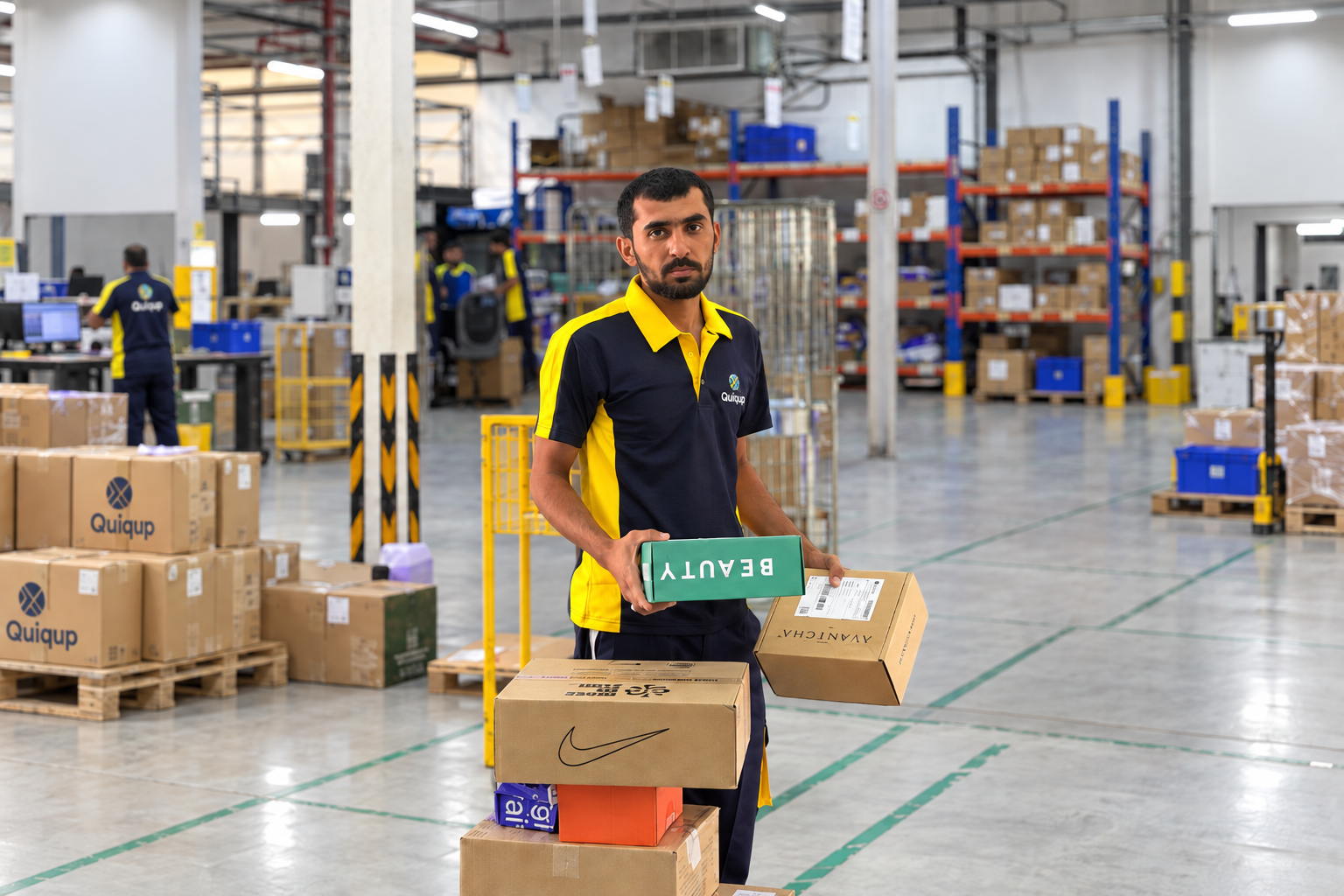
Where Quiqup fits into retention
For UAE ecommerce brands, delivery execution is often the missing piece between acquisition and retention.
Quiqup focuses on:
- reliable last-mile delivery
- same-day and next-day operations
- integrated fulfilment and delivery
- real-time tracking and communication
This matters because retention is built on consistency.
When fulfilment and delivery operate as one system, you reduce:
- delays
- missed dispatch
- tracking gaps
That consistency is what turns first-time buyers into repeat customers.
Summary: delivery as a retention lever
Customer retention is not just about marketing.
It’s built through experience.
Delivery plays a central role in that experience.
Key levers:
- flexible shipping options
- reliable dispatch and delivery
- strong tracking
- simple returns
- proactive communication
When these are working together, retention improves naturally.
When they’re not, no amount of marketing will compensate.
Fix delivery, and retention follows.







.png)