.png)
How to Reduce Your RTO Rate in UAE Ecommerce: A Practical Guide for Merchants

How to Reduce Your RTO Rate in UAE Ecommerce: A Practical Guide for Merchants
Return-to-origin (RTO) is one of the most expensive problems in UAE ecommerce. When a parcel comes back to your warehouse, you pay for the outward delivery, the return delivery, re-processing, and lose the potential sale, all at once. For many merchants in the UAE, RTO rates sit between 20% and 35%, eating directly into margins that are already thin.
This guide covers the root causes of RTO in the UAE market and five proven fixes that can get your rate below 10%.
What Is RTO and Why Is It So High in the UAE?
RTO (return to origin) happens when a delivery attempt fails and the package is sent back to the sender. It is different from a customer-initiated return: RTO is typically a failed delivery, not a change of mind.
UAE ecommerce has some structural challenges that push RTO rates higher than global averages. Cash on delivery (COD) still accounts for a significant share of orders in the region, and COD orders have considerably higher rejection rates than prepaid ones. Customers are also harder to reach by phone: many use WhatsApp rather than answering unknown numbers, and delivery windows are often too broad to plan around.
Address quality is another factor specific to the region. Dubai and wider UAE address formats can be inconsistent, with many residents relying on building names, landmarks, or plot numbers rather than standardised street addresses. When a driver cannot locate the delivery point, the order bounces.
Understanding which of these factors is driving your own RTO is the first step. Pull your RTO data by order type (COD vs prepaid), by zone, and by courier, and the pattern will usually be obvious.
Fix 1: Confirm Orders Before Dispatch
The single highest-leverage intervention for COD-heavy merchants is pre-shipment order confirmation. This means calling or WhatsApp-messaging the customer after they place the order and before you hand it to the courier.
A short confirmation message does two things. It filters out unintentional or impulse orders placed by customers who were never committed, and it gives you a chance to verify the address and set delivery expectations. Merchants who implement this step routinely report RTO drops of 10 to 15 percentage points on COD orders.
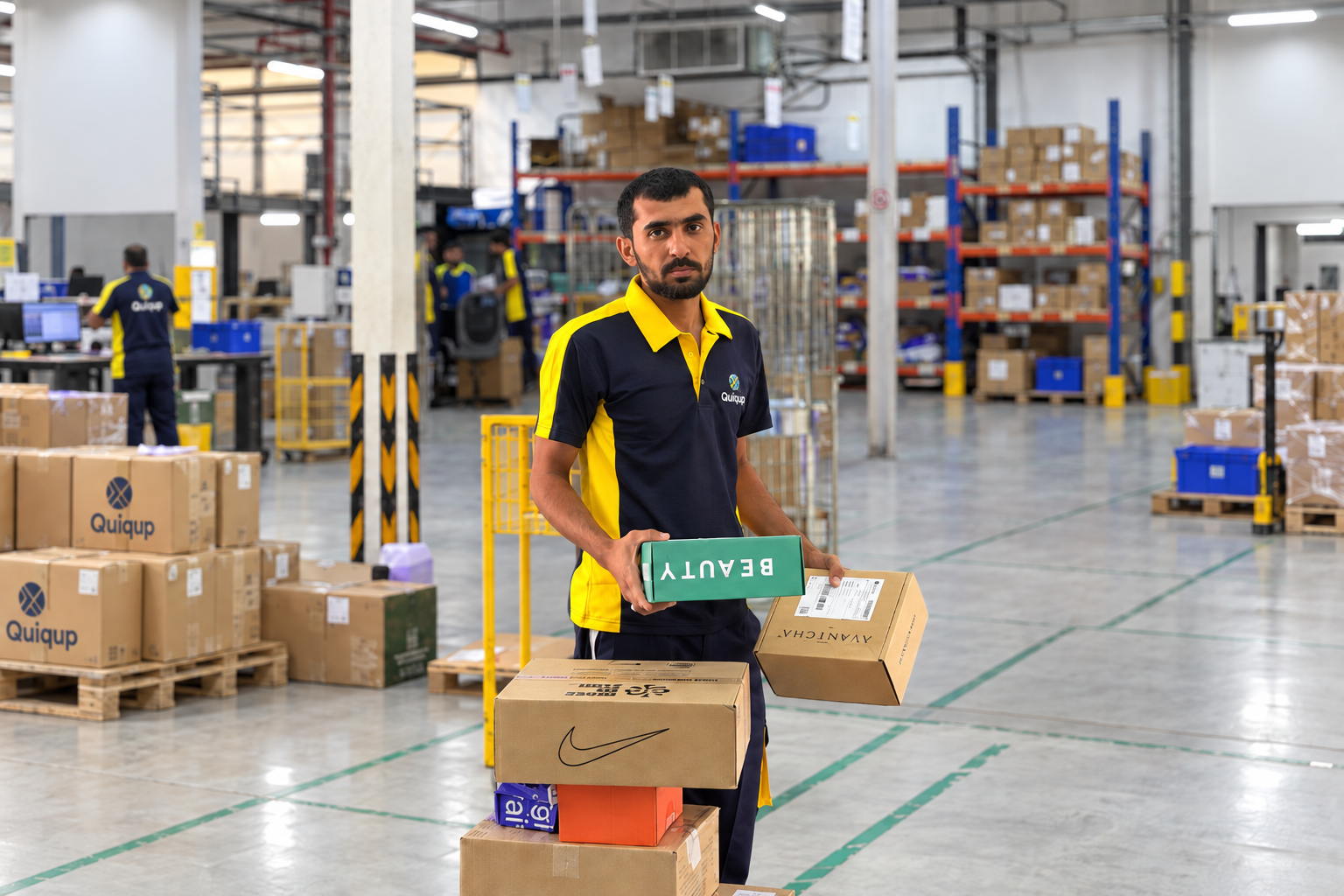
Quiqup's fulfilment operations integrate this confirmation step into the order workflow for merchants who need it, flagging COD orders for review before dispatch. Even a simple automated WhatsApp message with a confirmation link can do the same job at scale.
The timing matters: confirm within two to four hours of order placement, while the purchase is still fresh. A confirmation message sent 24 hours later gets far lower response rates.
Fix 2: Give Customers Real Delivery Visibility
Most RTO from "customer not available" is actually a scheduling mismatch, not genuine absence. The customer was home an hour earlier, or will be home an hour later, but the driver arrived in between.
The fix is accurate, narrow delivery windows with real-time tracking. When a customer knows their parcel will arrive between 2pm and 4pm and can see the driver on a map, they plan around it. When they get a vague "today" window and no updates, they give up and go out.
Quiqup's last-mile delivery in Dubai operates on same-day and scheduled slots with live tracking links shared directly with the recipient. This kind of visibility directly reduces the "not available" failure mode that accounts for a large share of UAE RTO.
If your current courier does not offer live tracking, it is worth modelling the RTO cost against the price difference for a carrier that does. The saving from even a 5-point RTO reduction will typically outweigh a higher per-shipment rate.
Fix 3: Push Customers Toward Prepaid
COD removal overnight is not realistic for most UAE merchants, but gradual migration toward prepaid reduces RTO structurally. COD orders in the UAE typically have RTO rates two to three times higher than prepaid orders. Every order you shift to prepaid is a permanent improvement to your RTO baseline.
Tactics that work:
- Offer a small discount (5 to 10 AED) or free express delivery for prepaid orders at checkout
- Show the COD fee transparently so customers see the cost comparison
- After a successful COD delivery, follow up with a loyalty offer for next-time prepaid
- For repeat customers, default to card on file or a digital wallet option
The goal is not to eliminate COD but to make prepaid the path of least resistance for customers who are already committed to buying.
Fix 4: Fix Your Address Capture
Incomplete or incorrect addresses cause driver failure even when the customer is home and waiting. In the UAE, this problem is more common than in markets with strict postcode systems.
Invest in address validation at checkout. Tools like Google Places Autocomplete, or UAE-specific address APIs, can catch common errors and prompt customers to verify unusual entries. Require a landmark or building name for deliveries where street addressing is ambiguous.
After an RTO event, flag the customer record and ask for address re-confirmation before accepting another order. Some repeat RTO events trace back to a single incorrectly captured address that never got corrected.
For B2B or bulk deliveries, build an address verification step into your onboarding. A three-minute address check at account creation prevents dozens of failed deliveries later.
Fix 5: Act on RTO Data in Real Time
Most merchants review RTO monthly, by which point a cluster of failures from a single driver, a single zone, or a single product type has already compounded. Moving to weekly or even daily RTO review lets you spot anomalies and fix them before they become a significant cost line.
The key metrics to track: RTO rate by courier partner, RTO rate by emirate or zone, RTO rate by product category, and RTO rate for new customers versus returning customers. New customers and COD orders in outer zones typically have the highest rates, which means you can build courier-selection and confirmation rules specifically for those segments.
Quiqup provides merchants with delivery performance dashboards that break down success and RTO rates by zone and delivery type, making it straightforward to identify where intervention is needed.
Measuring Progress: What Good Looks Like
A realistic target for a UAE ecommerce merchant with a mix of COD and prepaid is an overall RTO rate below 10%. Best-in-class merchants operating primarily on prepaid achieve 3 to 5%. If you are currently at 25% or above, the confirmation call and delivery visibility improvements alone should move you significantly within 30 days.
Track your RTO rate weekly, and separate your COD and prepaid cohorts so you can see the real signal. Blending the two often hides the COD problem and makes progress harder to measure.
Frequently Asked Questions
What is a good RTO rate for UAE ecommerce?
A good RTO rate for UAE ecommerce is below 10% overall. Merchants running primarily prepaid operations can achieve 3 to 5%, while those with a significant COD mix typically land between 8 and 15% once confirmation and visibility improvements are in place. Rates above 20% indicate a structural issue that requires immediate intervention.
Why is RTO higher for COD orders in the UAE?
COD orders carry higher RTO rates because there is no financial commitment from the customer at order placement. Impulse purchases, address errors, and customer unavailability all occur at higher rates when the customer has not yet paid. Pre-dispatch confirmation calls and SMS or WhatsApp verification significantly reduce COD RTO by filtering uncommitted orders before they are shipped.
Does same-day delivery reduce RTO?
Same-day delivery can reduce RTO when it is paired with accurate delivery windows and real-time tracking. The faster turnaround keeps the purchase intent high and reduces the window during which customers change their mind or become unavailable. Quiqup offers same-day on-demand delivery in Dubai with live tracking, which addresses both factors.
How does address quality affect RTO in the UAE?
Inconsistent address formats in the UAE, particularly in areas where street naming is incomplete, are a significant cause of failed deliveries. Implementing address autocomplete and validation at checkout, requiring a landmark or building name, and verifying addresses after an RTO event all reduce this failure mode.
What should I do after an RTO event?
After an RTO event, update the customer record, flag the address for re-verification, and check whether the failure was a courier issue or a customer issue. If it was courier-related, check whether the same driver or route is generating multiple failures. Contact the customer via WhatsApp to understand what happened before attempting redelivery. For COD customers with a history of RTO, consider requiring prepayment on future orders.
Can I reduce RTO without changing my courier?
Yes. Pre-dispatch order confirmation, improved delivery communication, and address validation at checkout are all within your control regardless of which courier you use. These interventions typically account for the majority of RTO reduction. Changing courier or adding a courier with better tracking and communication tools compounds these gains further.
How does Quiqup help reduce RTO for ecommerce merchants?
Quiqup reduces RTO through same-day and scheduled on-demand delivery in Dubai with live tracking, real-time delivery visibility shared with recipients, and delivery performance dashboards that let merchants track RTO by zone and courier. For fulfilment customers, Quiqup integrates pre-dispatch confirmation workflows and provides zone-level delivery data to support ongoing optimisation.








.png)